
Our Services

Neck pain / Arm pain
- Neck pain means soreness or stiffness in the neck region; arm pain means discomfort that travels from the neck into the shoulder, arm or hand.
- Causes include muscle strain, poor posture, arthritis, or nerve irritation from a disc or bone spur.
- Typical symptoms: local neck ache, stiffness, pain when moving, and sometimes numbness or tingling into the arm.
- Most people improve with simple measures: rest (not bedrest), posture correction, heat/ice, short courses of analgesics or anti-inflammatories.
- Physiotherapy (stretching, strengthening, manual therapy) and home exercise strongly help long-term recovery.
- Ergonomic fixes (chair, screen height, breaks from sitting) reduce recurrence.
- Imaging (X-ray/MRI) is used if symptoms persist, are severe, or neurological signs appear.
- Red flags—severe weakness, loss of bowel/bladder control, high fever, or recent major trauma—need urgent evaluation.
- Surgery is rarely needed for uncomplicated neck pain; it’s considered when a specific structural problem causes nerve or spinal cord compression with progressive weakness or severe, unrelenting pain.
- Surgical options (when needed) can include removal of compressing tissue and fusion or disc replacement depending on the problem.

Cervical Radiculopathy
- Cervical radiculopathy means a nerve root in the neck is irritated or compressed, producing pain, numbness or weakness down the arm.
- Typical causes are a herniated disc, degenerative (arthritic) changes narrowing the neural foramen, or trauma.
- Symptoms follow a nerve pattern: pain and sensory changes in a specific area of the arm and sometimes muscle weakness.
- Diagnosis is clinical plus imaging (MRI) when needed to identify the exact nerve root.
- Initial treatment is conservative: pain control (NSAIDs), short activity modification, cervical traction in some cases, and a structured physiotherapy program.
- Epidural steroid injections or selective nerve root injections may be offered for persistent, severe radicular pain.
- Most people improve over weeks to months with non-operative care.
- Surgery is considered if there is progressive neurologic deficit, intolerable pain despite conservative care, or persistent dysfunction affecting daily life.
- Common surgeries include anterior cervical discectomy and fusion (ACDF), posterior foraminotomy, or cervical disc replacement depending on pathology and surgeon judgment.
- Outcome after surgery is generally good when a single compressive lesion is identified and treated.

Cervical Myelopathy
- Cervical myelopathy refers to compression or dysfunction of the spinal cord in the neck and is often progressive.
- Causes include degenerative spondylosis, disc bulges, ligamentous thickening, or congenital narrow canal.
- Common signs: hand clumsiness, walking difficulty (unsteady gait), numbness, exaggerated reflexes, and sometimes bowel/bladder problems.
- Early detection matters because delay can allow irreversible spinal cord injury.
- Diagnosis is clinical plus MRI to show cord compression and signal changes.
- Conservative care (physical therapy, analgesics) may help symptoms briefly but rarely halts progression if the cord is compressed.
- Indications for surgery: clear clinical myelopathy with MRI evidence of compression, progressive symptoms, or significant functional decline.
- Surgical goals: decompress the spinal cord and stabilize the spine if needed; approaches include anterior, posterior, or combined surgeries depending on where and why compression occurs.
- Surgery often improves or stabilizes function, but recovery can be gradual and incomplete depending on disease duration and severity.
- Prompt referral to a spine specialist is recommended when myelopathy is suspected.

Slip Disc (Disc Herniation)
- A slipped disc (disc herniation) happens when the soft inner disc pushes through the outer layer and can press on nearby nerves.
- It commonly causes localized back or neck pain and radiating nerve pain (radiculopathy) — for lumbar discs, pain may go down the leg.
- Symptoms vary by level: pain, numbness, tingling, or weakness in the distribution of the affected nerve root.
- Most cases improve with rest, activity modification, pain medicines and a guided physiotherapy program.
- Short courses of oral steroids or nerve root injections can help severe radicular pain.
- Imaging (MRI) is used when symptoms are severe, persistent, or when neurological deficits occur.
- Red flags (progressive weakness, loss of bladder/bowel control) require emergency evaluation.
- Surgery (microdiscectomy or endoscopic discectomy) is considered for persistent, severe pain or progressive neurological deficits despite adequate conservative care.
- Surgical removal of the herniated fragment offers faster pain relief and recovery for selected patients.
- Long-term outcomes are generally good but recurrence or adjacent degeneration can occur.

Back Pain (Low Back Pain)
- Low back pain is pain in the lower part of the spine and is one of the most common causes of disability worldwide.
- Causes range from muscle strain, degenerative discs, facet arthritis, to more serious causes (infection, fracture, cancer) — most are mechanical.
- Most acute low back pain is self-limiting and gets better within weeks with conservative care.
- First-line treatment: stay active, use simple pain relievers (paracetamol/NSAIDs where appropriate), and avoid prolonged bed rest.
- Structured exercise, graded return to activity, and physiotherapy reduce recurrence and improve function.
- Imaging is not routinely needed for uncomplicated acute back pain; it’s reserved for red flags or persistent pain >6 weeks.
- Specialist options include injections, targeted physiotherapy programs, pain clinic treatments, or psychological/rehabilitation approaches for chronic pain.
- Surgery is considered for specific structural problems (e.g., unstable spondylolisthesis, large disc herniation with neurological deficit, spinal stenosis with neurogenic claudication) after conservative care fails.
- Many chronic low back pain treatments show modest effects; individualized, multi-modal care is often best.
- Prevention focuses on exercise, maintaining healthy weight, good ergonomics, and smoking cessation.

Leg Pain
- “Leg pain” is a broad symptom — it may come from the spine (nerve-related), from muscles, blood vessels, or joints.
- When caused by spine problems, it typically follows a nerve pattern (radicular pain) and can include numbness or weakness.
- Vascular causes (claudication) present as cramping that worsens with walking and improves with rest.
- History and exam help distinguish nerve vs vascular vs musculoskeletal causes; Doppler studies or MRI may be ordered accordingly.
- Initial management depends on cause: physiotherapy and pain control for muscle or nerve pain; vascular risk modification and supervised exercise for vascular claudication.
- For nerve root compression from a disc, conservative care (physio, medications, selective injections) is first-line.
- Surgery is considered for progressive weakness, severe unremitting pain or failure of conservative care when a clear surgical target is present.
- Common spine surgeries for leg pain from a disc or stenosis include discectomy, laminectomy, or decompression ± fusion.
- Many patients have substantial improvement with non-operative care; tailoring treatment to the underlying cause is essential.
- If leg pain is sudden with severe weakness, or associated with loss of bowel/bladder control, seek immediate medical care.

Sciatica
- Sciatica describes pain that travels along the path of the sciatic nerve — typically from the lower back into the buttock and down the back of the leg.
- The most common cause is lumbar nerve root irritation from a herniated disc, though other causes (spinal stenosis, piriformis syndrome) exist.
- Symptoms: sharp, shooting leg pain, numbness, tingling, and sometimes weakness in the leg or foot.
- Many cases improve in 4–12 weeks with conservative care: activity modification, analgesics, and physiotherapy focused on core and nerve-gliding exercises.
- Short courses of epidural steroid injections may help patients with severe radicular pain.
- Imaging (MRI) is useful when pain is severe, progressive, or when neurologic deficits are present.
- Surgery (e.g., microdiscectomy) is considered for persistent, severe pain or progressive neurologic deficit despite conservative care.
- Outcomes after surgery are generally favorable for clearly compressive disc herniations.
- Education, exercise, weight control and ergonomics reduce recurrence risk.
- If sciatica is accompanied by sudden saddle numbness or bowel/bladder changes, seek emergency care (possible cauda equina).
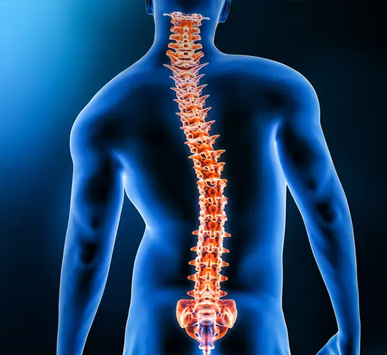
Scoliosis
- Scoliosis is a sideways curvature of the spine that often includes rotation of the vertebrae and is commonly identified in adolescence (Adolescent Idiopathic Scoliosis, AIS).
- Many cases are mild and only need monitoring; severe curves can cause pain, cosmetic concerns, or, rarely, cardiopulmonary issues.
- Diagnosis is clinical with X-rays to measure curve size (Cobb angle) and monitor progression.
- Conservative management for mild/moderate curves includes observation, physiotherapy, and bracing during growth to prevent progression.
- Physiotherapy approaches (Schroth and others) aim to improve posture, muscular balance and breathing mechanics.
- Surgery (spinal fusion and instrumentation) is recommended for progressive curves beyond surgeon/society thresholds (commonly >45–50° in growing patients or symptomatic adults) or when deformity and symptoms are severe.
- Surgical goals: correct deformity, stop progression, and balance the spine while preserving as much motion as possible.
- Long-term outcomes are generally good for appropriately selected patients, but surgery has risks and requires recovery and rehabilitation.
- Adult degenerative scoliosis is managed differently (pain/imbalance symptoms) and may need decompression ± fusion.
- Early detection and monitoring through adolescence improves decision making and outcomes.

Physiotherapy
- Physiotherapy uses exercise, manual therapy, education and movement retraining to treat spine conditions and improve function.
- It is a first-line treatment for most neck and back pain problems and for radiculopathy in the absence of progressive neurological deficit.
- Programs combine strengthening (core and paraspinal muscles), flexibility, posture correction, and graded activity to reduce pain and restore normal movement.
- Evidence supports exercise therapy for chronic low back pain and supervised programs for improving outcomes.
- Manual therapy (mobilization, manipulation) can help some patients, often when combined with exercise.
- Physiotherapists also teach self-management, ergonomic advice, and pain coping strategies to reduce recurrence.
- For scoliosis, specialised physiotherapy (e.g., Schroth) can support posture and may help in bracing programs.
- Physiotherapy is usually low-risk and is tailored to the patient’s goals, comorbidities and symptom severity.
- If red flags or progressive neurologic deficits appear, physiotherapy should be paused and medical review obtained.
- Long-term adherence to exercise is the key predictor of sustained benefit.

Lifestyle Management
- Lifestyle measures play a major role in preventing and managing spine problems over the long term.
- Maintain a healthy weight — excess body weight increases spinal load and risk of chronic pain.
- Regular exercise (strength, flexibility, aerobic fitness) reduces risk of low back pain and improves recovery.
- Ergonomics: use good sitting posture, proper screen height, and take frequent micro-breaks when sitting long hours.
- Stop smoking — smoking is linked to worse spine degeneration and poorer surgical healing.
- Manage comorbidities (diabetes, osteoporosis) which influence healing and spinal health.
- Sleep posture and a supportive mattress/pillow reduce neck and back strain.
- Learn safe lifting techniques (bend knees, keep load close) to avoid acute back injury.
- Stress management and addressing mental health are important — chronic pain is influenced by psychological factors.
- Lifestyle changes combined with targeted therapy give the best chance for long-term spine health.
Empowering you with a healthy spine at Best Spine Clinic in Mumbai
Highly Experienced
Spine Specialists
Equipped with
Latest Technology
Multidisciplinary and
Holistic Approach
Need Expert Advise With Our Spine Doctor
Engage in a expert session with our experienced spine doctors to address your spinal health concerns and receive expert guidance tailored to your needs.
Frequently Asked Questions
To book an appointment at Nova Ortho Spine Center, you can visit our contact us page. there you will find information on how to schedule an appointment. You can also find the clinic’s location, hours of operation, and contact information.
Alternatively, you can also call the clinic’s mobile number 8425888801 and speak with a representative to schedule an appointment. You may need to provide some basic information such as your name, contact details, and the reason for your visit.
It’s recommended to check the availability of the doctors and the timings as per your convenience before booking an appointment.
Minimally invasive treatment options refer to procedures that use small incisions or specialized instruments to access the spine, rather than traditional open surgery. These procedures are designed to minimize the damage to surrounding tissue and result in less pain and faster recovery times for patients.
At Nova Ortho Spine Center, we do offer a variety of minimally invasive treatment options for conditions of the spine. Some examples of these include:
- Microdiscectomy: This is a surgical procedure used to treat a herniated disc in the lumbar (lower) spine. It is performed through a small incision, using a microscope to visualize the affected area.
- Endoscopic spine surgery: This type of surgery uses a small camera and specialized instruments to access the spine through small incisions. It is used to treat conditions such as spinal stenosis and herniated discs.
- Percutaneous laser disc decompression: This procedure uses a laser to treat herniated discs. A small incision is made, and a laser is inserted to vaporize the herniated portion of the disc.
- Vertebroplasty & Kyphoplasty : These are procedures used to treat vertebral fractures caused by osteoporosis or other conditions. A small incision is made, and a special cement is injected into the vertebral body to stabilize the fracture and reduce pain.
- Radiofrequency ablation: This is a non-surgical procedure in which a small needle is inserted into the spine and radiofrequency energy is used to disrupt the nerve impulses that are causing pain.
At Nova Ortho Spine Center, we strive to provide our patients with the most advanced and effective treatment options available. Our team of highly skilled and experienced spine specialists are well-versed in minimally invasive techniques and will work with each patient to determine the best course of treatment for their specific condition.
Success rates for spine treatments can vary depending on the specific condition being treated, the patient’s overall health, and the expertise of the treating physician. At Spine Clinic, we take pride in our high success rates for the treatments we offer.
It’s important to note that success rates can be difficult to measure, as they depend on a variety of factors and can be defined in different ways. Some patients may consider a treatment successful if it reduces their pain, while others may consider it successful if it improves their ability to function.
At Spine Clinic, we track our success rates for various procedures and treatments and use them to continually improve our care. We also encourage our patients to provide feedback on their treatment experiences, which can also be used to evaluate the success of our treatments.
However, it’s important to note that every patient is unique and the results can vary. Therefore, it’s recommended to consult with the specialists at Spine Clinic for more detailed and accurate information about the success rates for the treatment you are considering.
Yes, it is recommended to arrive early for your appointment at Nova Ortho Spine Center. Arriving early will give you time to fill out any necessary paperwork, review your medical history with the staff, and ensure that you are prepared for your appointment.
It also gives you time to relax and get familiar with the clinic’s environment before the appointment.
You may also want to bring a list of current medications you are taking, any medical records or imaging studies related to your condition, and your insurance card.
The recovery time after spinal surgery can vary depending on the type of surgery and the patient’s overall health. In general, more complex procedures and surgeries involving major spinal structures will have a longer recovery time.
For example, a lumbar microdiscectomy, a common surgery to treat a herniated disc in the lower back, typically has a recovery time of several weeks to a few months. Patients may be able to return to work and normal activities within a few weeks, but may need to avoid heavy lifting or strenuous activity for several months.
A spinal fusion surgery, which involves fusing two or more vertebrae together, typically has a longer recovery time. Patients may need to stay in the hospital for several days or a week, and may not be able to return to work or normal activities for several months.
Recovering from a minimally invasive procedure like endoscopic surgery or percutaneous laser disc decompression, may be faster with less pain and discomfort. However, it’s important to note that recovery time can vary depending on the patient’s condition, age and overall health.
It is important to discuss with your surgeon the estimated recovery time and post-surgery instructions after the surgery. Your surgeon will also give you instructions on when you can start physical therapy, which will help you regain your strength and mobility.
We will recommend you to do your own research, speak with your doctor and consider factors such as the qualifications and experience of the physicians, the types of treatments offered, the clinic’s success rates, and patient reviews. Nova Ortho Spine Center is one of the best spine clinics in Mumbai, known for their team of highly skilled and experienced spine specialists and providing a wide range of treatment options.
It is recommended to see a spine surgeon or visit a spine clinic if you are experiencing any persistent symptoms of a spine problem such as:
- Chronic or severe back pain or neck pain
- Numbness or tingling in the arms, legs, or hands
- Weakness in the arms, legs, or hands
- Stiffness in the back or neck
- Limited range of motion in the back or neck
- Loss of bladder or bowel control
- Radicular pain that radiates from the spine to the arms or legs
- Myelopathic symptoms such as difficulty walking, loss of balance, and weakness in the legs
- Visible deformity of the spine such as scoliosis
- Failure of conservative treatments such as physical therapy, medication, or epidural injections
- Symptoms that interfere with daily activities or your quality of life
It’s important to note that these symptoms may be caused by other conditions as well, so a proper diagnosis from a qualified spine specialist is important. Even if your symptoms are mild and not debilitating, if you have a family history of spine problems or certain risk factors such as a sedentary lifestyle, smoking, or obesity, it’s a good idea to consult a spine specialist for an evaluation.